
Due to the complex nature of cardiological conditions, telecardiology is becoming a much used modality for obtaining specialist second opinion or for providing care to people in remote locations.
In the simplest form of telecardiology, a 12-lead Electrocardiogram (ECG) is used in the transmitting center, such as a primary care provider’s office or a rural clinic. The acquired ECG signals are transferred to the receiving end, which is usually the specialist’s office. Once the specialists interpret the signal, an oral or written report is sometimes sent back to the transmitting center.
Telecardiology can be successfully employed to monitor patients at home and in the hospital. Pre-hospital telecardiology helps remote monitoring of patients with acute coronary syndrome and for use by primary care physicians and general practitioners. Post-hospital telecardiology comprises solutions for the remote monitoring of discharged patients and reducing re-admissions in patients with heart failure or implants. In-hospital telecardiology mostly deals with real-time transfer and interpretation of electrocardiography signals between rural and tertiary care hospitals.

Benefits of telecardiology
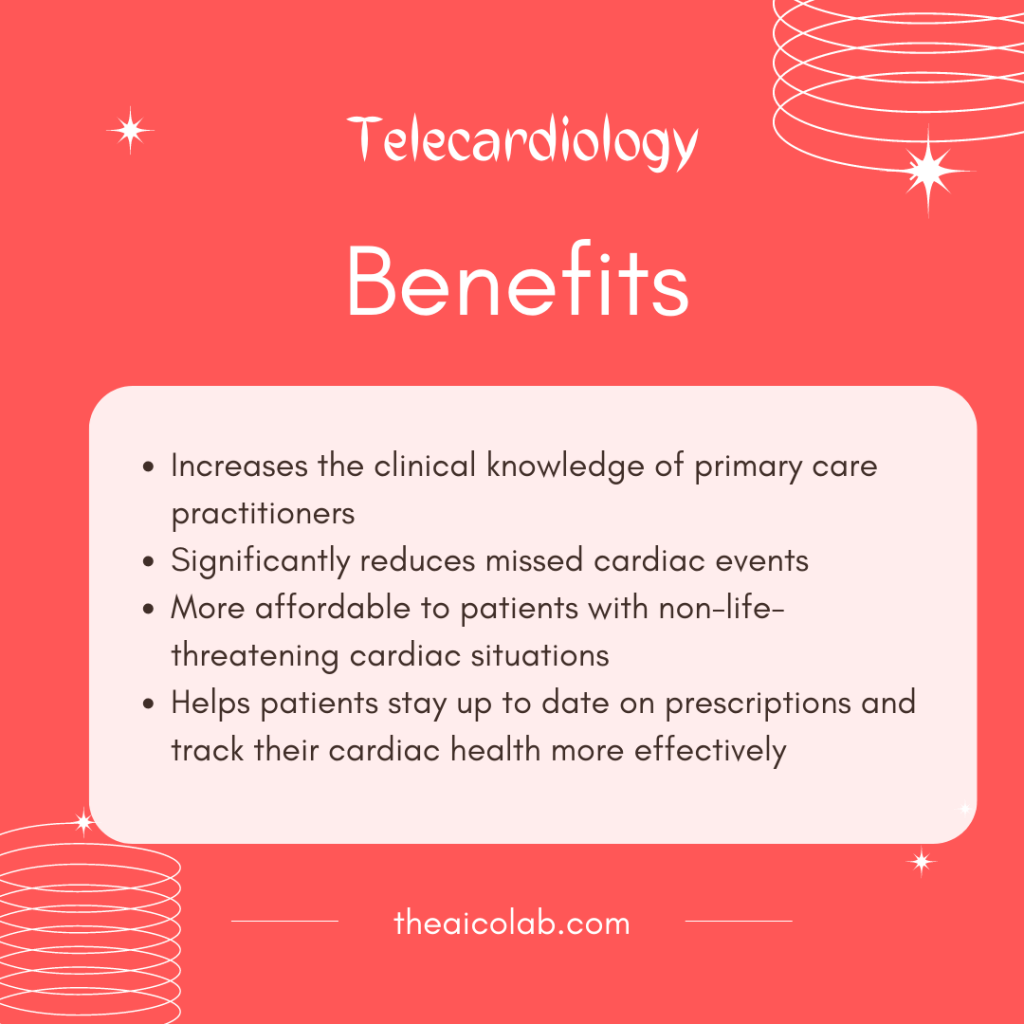
- By empowering primary care practitioners to diagnose and treat cardiac patients accurately, telecardiology helps increase the clinical knowledge of these practitioners.
- Telecardiology setups can significantly reduce missed cardiac events.
- Telecardiology can also be more affordable to patients with non-life-threatening cardiac situations, by helping them avoid unnecessary visits to an emergency room.
- Remote monitoring and follow-ups help patients stay up to date on prescriptions and track their cardiac health more effectively.
Challenges to be addressed
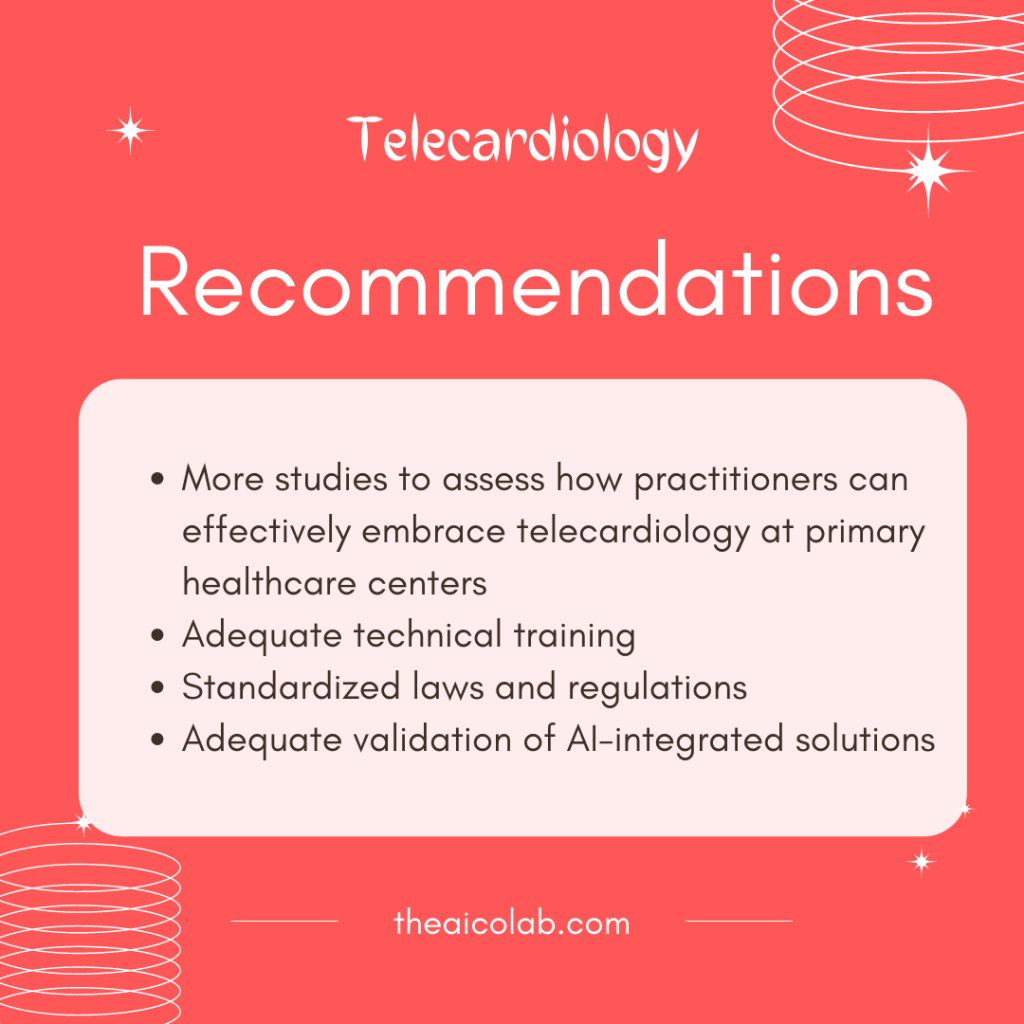
- More studies are needed to assess how practitioners can effectively embrace telecardiology at primary healthcare centers.
- A successful integration of telecardiology into the usual practice would require training about computers and telemedicine laws and practices.
- AI-integrated telecardiology solutions have to be adequately validated with large-scale clinical studies and real-world data
Global Telecardiology Market Report
Here is a link to the latest global telecardiology market report : Report
A few AI-integrated Telecardiology Providers
- Coala: Coala Life, an award-winning Swedish healthtech company has launched Coala Connect Rx, a telemedicine-based prescription in partnership with leading cardiologists. Users receive a Coala Heart Monitor, a CE and FDA-cleared patch-free, smartphone-based ECG monitor that monitors and detects the most common cardiac arrhythmias in real-time. The data is sent to both the patients and the healthcare providers. The data is also analyzed by predictive algorithms based on pattern recognition (https://www.coalalife.com/us/about/)
- Reid Telehealth service: Reid Telehealth service allows patients with Myocardial Infarction or Heart Failure to receive telecardiology services from their board-certified cardiologists. The cardiologists remotely evaluate the patients using a digital stethoscope, exam camera, and ECG (Source: https://www.reidhealth.org/services/telecardiology)
- InTouch Health (now a part of Teladoc Health): The InTouch Cardiology solution supports even the most complex cardiac patients because of the use of peripheral-enabled devices. The solution is built on SoloTM cloud-based platform, which provides an integrated and scalable care experience. The platform has several modules for coordinating patient intake, device scheduling, clinical documentation, handling patient’s digital images. The platform also has in-built business analytics programs to drive operational and financial improvements (https://intouchhealth.com/telehealth-solutions/cardiology/).
- Implicity: Implicity is a French digital medical technology company that provides an innovative global remote monitoring platform for connected medical devices. The platform includes AI-based algorithms that use the collected data to enhance patient care. The prime focus area is cardiology, where a solution to aggregate data from all cardiac electronic implantable devices across manufacturers is being offered. The platform also has several other features for optimizing patient scheduling and billing, alerting healthcare providers to clinical complications even before the patient becomes symptomatic, and easy integration with the patient’s medical records (https://www.implicity.com/our-solutions/cardiac-remote-monitoring-platform/)
- Sutter Health: Sutter Health has designed an efficient telehealth model to connect cardiologists to patients in rural counties in Northern California. Like Raid telehealth, Sutter is also an example of a clinic-clinic telemedicine solution where the patients are in the local clinic and the cardiologists are remote (https://www.ekohealth.com/case-study/sutter-health). The telehealth model utilizes a 3M Littmann core digital stethoscope, Eko platform, which has built-in AI algorithms to detect early signs of cardiopulmonary disease (https://www.ekohealth.com/solution/telemedicine), Tryten telemedicine care, and the HIPAA-compliant Vidyo telehealth video conferencing service.
- FibriCheck: FibriCheck is a CE and FDA cleared medical smartphone application to detect heart rhythm disorders. It uses the camera of a smartphone or the optical sensors of a smartwatch to detect heartbeats and derives a heart rhythm using a technique based on photoplethysmography. The data is sent to an online platform where predictive algorithms accurately diagnose the heart rhythm. FibriCheck has now devised a telehealth solution to support patients with AF during the COVID-19 pandemic (https://www.fibricheck.com/telecheck-af/).
- Happitech: Founded in 2015, Happitech is an Amsterdam-based, international, digital health company that has developed medical-grade technology for remote patient monitoring of vital signs such as heart rate, heart rate variability, and Atrial Fibrillation on a smartphone without the need for wearables or other devices. Designed by a team of aerospace engineers and leading clinicians, the company’s AI-powered software development kit (SDK) integrates quickly and seamlessly into health management applications. Happitech’s SDK has been clinically tested and validated to acquire CE certification and TGA Approval (https://www.happitech.com/medical/)
Note: If you are a telecardiology provider, and would like to be featured in this page, please send a brief description of your company to theaicolab@gmail.com.
 IMPACT Labs Academy
Leave a comment