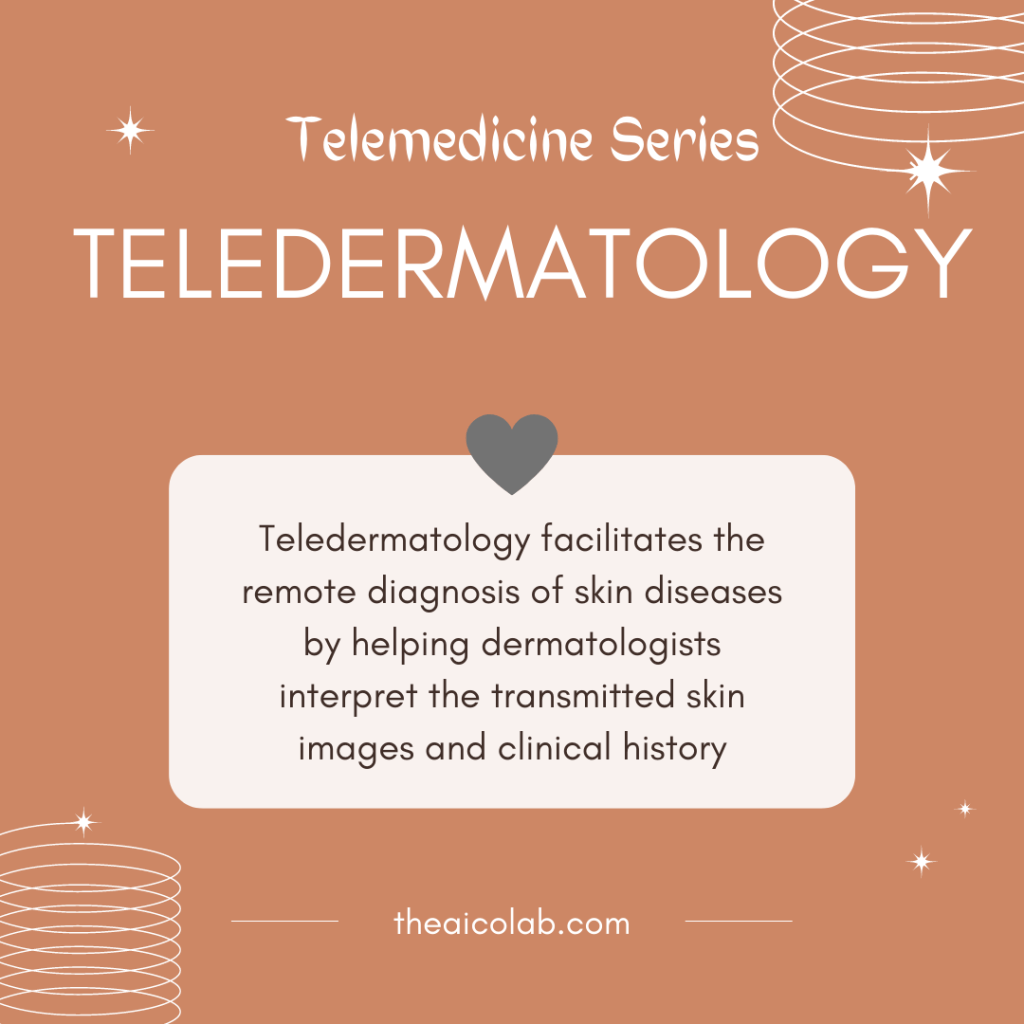
Teledermatology is one of the most popular applications of telemedicine. In this field, skin images and associated clinical history are transferred to remote dermatologists through audio, visual, and data communication channels. Teledermatology facilitates the remote diagnosis of skin diseases by helping dermatologists interpret these skin images and clinical history.
Teledermatology services are usually provided using the asynchronous model, also called the “Store and Forward” model. In this framework, digital skin images are captured from patients and sent to dermatologists for interpretation. This method is more cost-effective than the synchronous mode as there is no expensive video calling equipment needed for virtual patient-to-provider communication. However, in special cases of teledermatology, called teledermoscopy and teledermatopathology, real-time or interactive delivery models could be used.
Benefits of Teledermatology
Many organizations are now turning towards providing low-cost virtual care to patients rather than conventional face-to-face appointments to save time. Depending on location, specialist availability, and even insurance status, patients could access various screening, triaging, and diagnostic paths to maximize healthcare accessibility and affordability. Besides the obvious benefits to patients, teledermatology can also serve as an educational platform for residents or medical students and physicians to learn more from specific patient cases and share knowledge and diagnostic and treatment approaches. Below is a summary of the key benefits of teledermatology.

Recommendations for Teledermatology
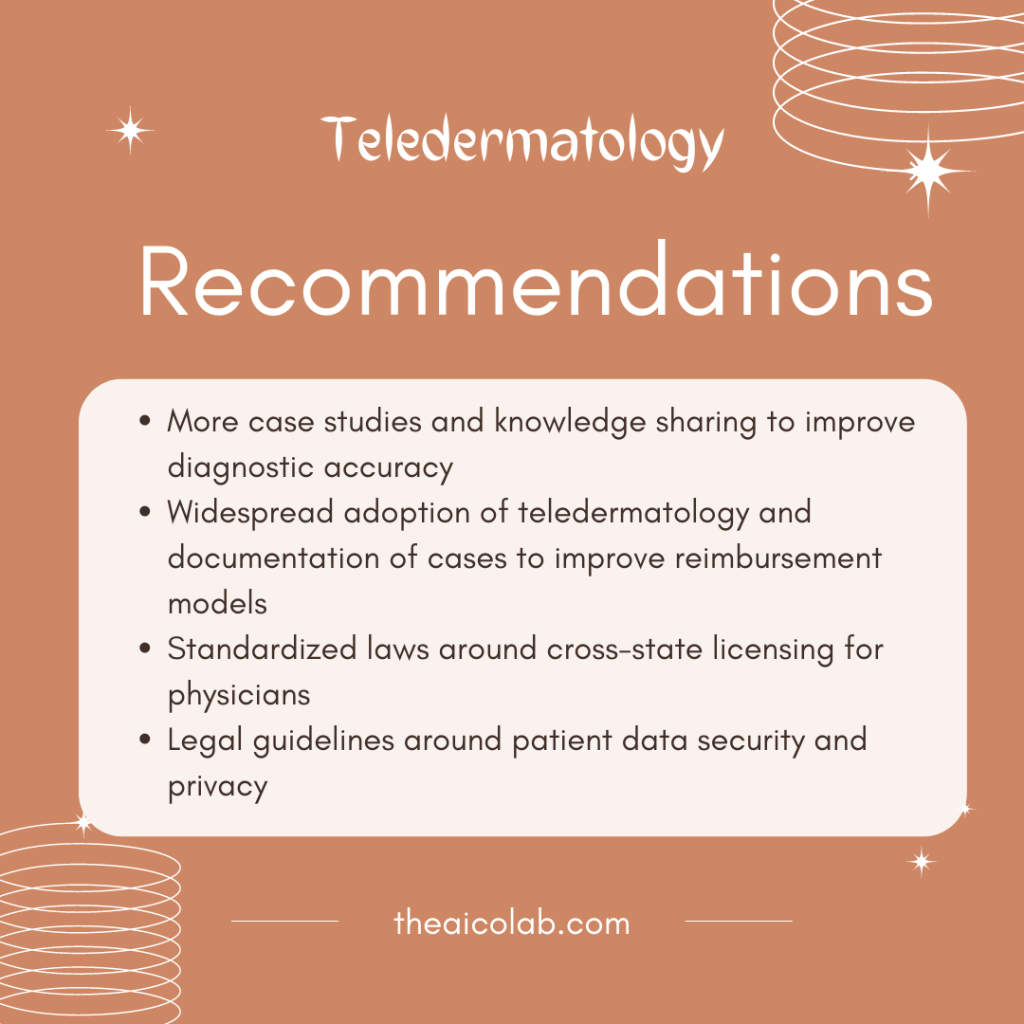
Similar to other telemedicine specialties, teledermatology could also benefit from improvements in several areas – clinical, technological, economic, legal, and ethical.
In terms of clinical improvements, the store and forward approach might not always be suitable for diagnosing certain types of skin lesions. Examples are skin conditions where full body examination is needed and lesions that need palpation. In these situations, both dermatologists and non-dermatologists should work together to determine which cases would need an in-person consult. More case studies and education would help improve the clinical diagnostic accuracy of teledermatology.
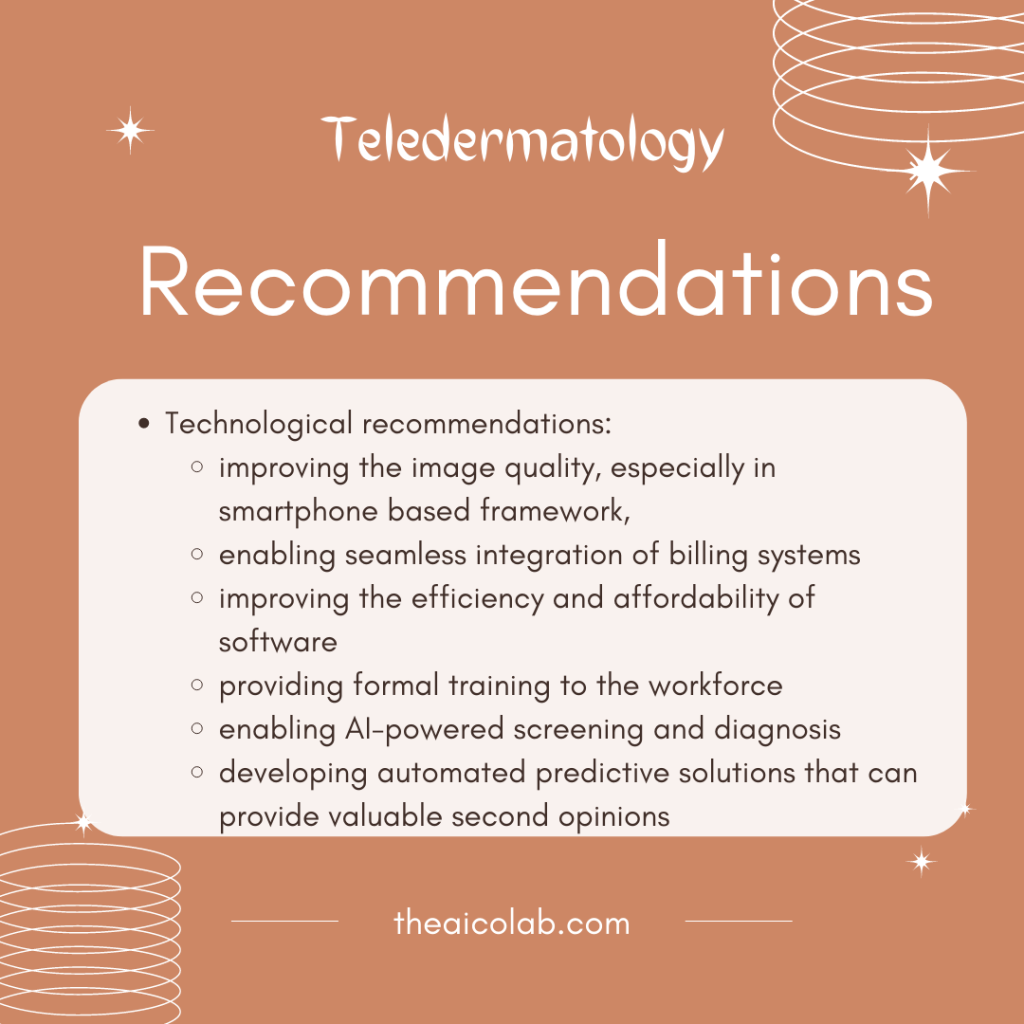
Technological recommendations for adoption include improving the image quality, especially in smartphone based framework, enabling seamless integration of billing systems, and improving the efficiency and affordability of software. Further, formal training should be provided to the physicians and other healthcare personnel. AI-powered screening and diagnosis will likely help to expand the scope and variety of dermatologic care. Another critical area of progress would be to develop safe, effective, and accessible, automated predictive solutions that can provide valuable second opinions to patients and dermatologists.
The most common economic challenge is the fact that teledermatology consultations are reimbursed at a lower rate compared to in-person visits. More widespread adoption of teledermatology practice and adequate documentation of remote procedures might improve the reimbursement models.
There is a need for standard legislation around cross-state licensing for physicians providing telehealth services across states, online prescribing, and informed consent from patients. Moreover, there should also be legal guidelines around patient data security and privacy.
Global Teledermatology Market Report
The global teledermatology market was valued at US$ 12.70 billion in 2021 and is expected to reach over US$ 67.43 billion by 2030 with a registered CAGR of 20.4% from 2021 to 2030 (Source: Precedence Research)
Key Teledermatology providers
- SkinVision: SkinVision is a paid medical app that allows users to upload an image of the suspicious skin spot and uses a CE-approved, clinically validated AI algorithm to assess the image for the presence of malignancy. Based on the assessment, the app recommends continuous monitoring or scheduling an appointment with a dermatologist for further examination.
- DermExpert: VisualDx is a diagnostic clinical decision support system that provides an exhaustive curated library of all types of medical images. It enables physicians to quickly search for diagnoses, drug reactions and make a differential diagnosis. For teledermatology, it has an AI-powered HIPAA compliant solution called DermExpert that uses machine learning algorithms to analyze the skin image uploaded by the user.
- 3Derm, now part of Digital Diagnostics: 3Derm specializes in providing a teledermatology platform. It obtained two FDA Breakthrough Device designations for 3DermSpot, an AI-based algorithm to automatically detect several types of skin cancers (https://www.digitaldiagnostics.com/products/skin-disease/dermspot/).
- FotoFinder: Fotofinder is a family-run medical imaging systems company based in Bavaria, Germany. It has developed several imaging solutions for skin cancer detection, some of them are AI-based (https://www.fotofinder.de/en/technology/skin-cancer-detection). It has solutions for teledermatology such as the handyscope.
- First Derm: First Derm is a US-based online dermatology and telehealth website providing answers to skin conditions. Users send in cases to board certified dermatologists via an app, and the dermatologists respond within 24 hours with professional information about the condition.
- DirectDerm: DirectDerm is a teledermatology platform. It connects patients and referring physicians to the leading dermatologists through a secure web and mobile platform for timely, affordable consultations and accurate and comprehensive diagnoses and treatment plans.
- Miiskin PRO: Miiskin PRO is a HIPAA-compliant store-and-forward teledermatology solution that facilitates information-sharing between patients and providers regarding skin conditions. Patients can also use the Miiskin app to keep track of the changes in their skin and share with their physicians periodically.
- Molescope™: MoleScope™ is a smartphone attachment for dermoscopy that provides a high-resolution, detailed view of the skin through magnification and specialized lighting. Patients can securely send their mole images to their dermatologist for an online mole checkup. The MoleScope app is powered by DermEngine, the world’s most intelligent skin analytics platform.
Note: If you are a teledermatology provider, and would like to be featured in this page, please send a brief description of your company to theaicolab@gmail.com.
 IMPACT Labs Academy
Leave a comment