
Telehealth is increasingly being used in obstetrics, especially in the following areas:
- virtual consultation
- remote monitoring of ultrasound in maternal-fetal medicine
- remote monitoring of conditions by endocrinologists
- prenatal and postnatal monitoring

Benefits
Studies have observed that remote monitoring and smartphone apps helped decrease the number of unwanted outpatient visits to manage diabetes and hypertension in high-risk obstetric patients (Pubmed Article). When AI is integrated with telemonitoring, it can help better manage patients, reduce healthcare costs, minimize OB/GYN practitioners’ workload, increase diagnostic efficacy and accuracy, detect early signs of complications in high-risk patients, and detect preterm labor and detect or differentiate various other pregnancy complications.

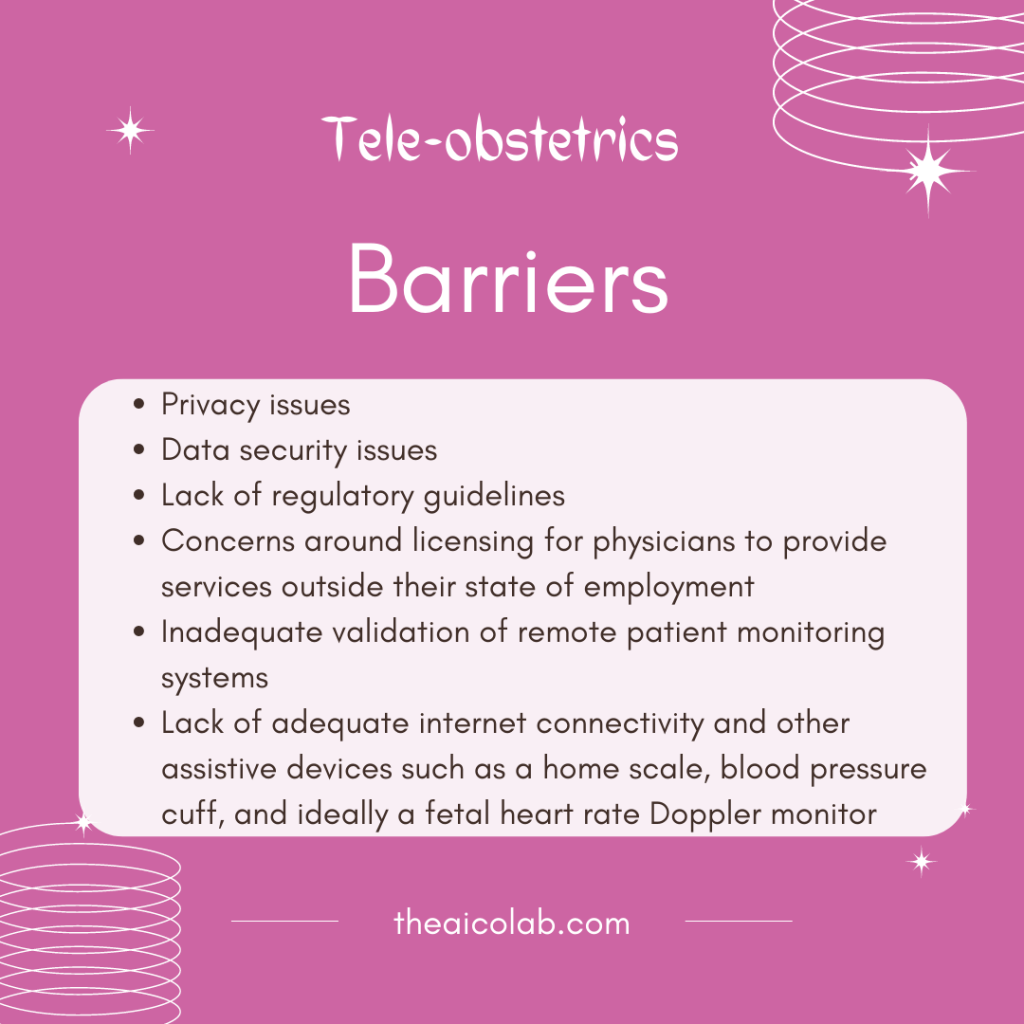
Barriers
As with any telehealth approach, patient involvement and the availability of technologies for efficient home pregnancy care could lead to enhanced adoption of telehealth services in obstetrics. Further improvements must be made to ensure patient privacy, security, and affordability. There is also a need to establish regulatory guidelines to provide a standard practice. Moreover, there is a need to develop and validate integrated obstetric telemonitoring systems.
Key Telehealth providers in obstetrics
- Babyscripts: Babyscripts provides a virtual maternity care platform that allows physicians to deliver quality maternal care using a mobile app and a set of FDA-approved remote patient monitoring tools for blood pressure and weight. The app has a built-in machine learning-based trigger system that alerts the physicians of any elevated levels in the monitored parameters.
- Chiron Health: Chiron allows OB/GYN practitioners to remotely manage medications for depression, anxiety, blood pressure, and birth control. It has a provision for remote video consultations to manage gestational diabetes and postpartum depression and discuss sudden hypertension and preeclampsia issues.
- Rimidi: Rimidi’s remote patient monitoring platform stores patient health data captured using connected devices such as blood pressure cuffs, weight scales, and blood glucose meters. It also collects and stores data from the patient’s electronic health records to provide a comprehensive health outlook for continuous chronic disease management. Recently, Rimidi announced a partnership with Boston Medical Center to remotely monitor the blood pressure of women experiencing high-risk pregnancies (Rimidi and BMC).
- Maven Clinic: Maven provides a virtual care model for women and families by providing a dedicated care advocate and options for on-demand appointments. The software also checks in with patients proactively to check for symptoms or send medication reminders.
- VisuWell: VisuWell provides a teleobstetric platform that can be easily integrated into the existing technology suite used by providers and hospitals. The platform has options for store and forward communications and video sessions with specialists and is well suited to provide support to primary care physicians in rural areas.
Note: If you are a telehealth provider in the field of obstetrics, and would like to be featured in this page, please send a brief description of your company to theaicolab@gmail.com.
 IMPACT Labs Academy
Leave a comment